

RETIREMENT PLANNING CALCULATOR | FEATURES
Keep more of what you've worked for
Taxes don't stop in retirement. Which account you spend from, when you convert to Roth, and where your income lands against the tax brackets and Medicare's surcharges all change how much you keep.
Ready Aim Retire shows how each month of your retirement gets paid for, works out every tax on it, and lets you change the recipe. When you'd rather not test it all by hand, the Optimizer does it for you.
Start Planning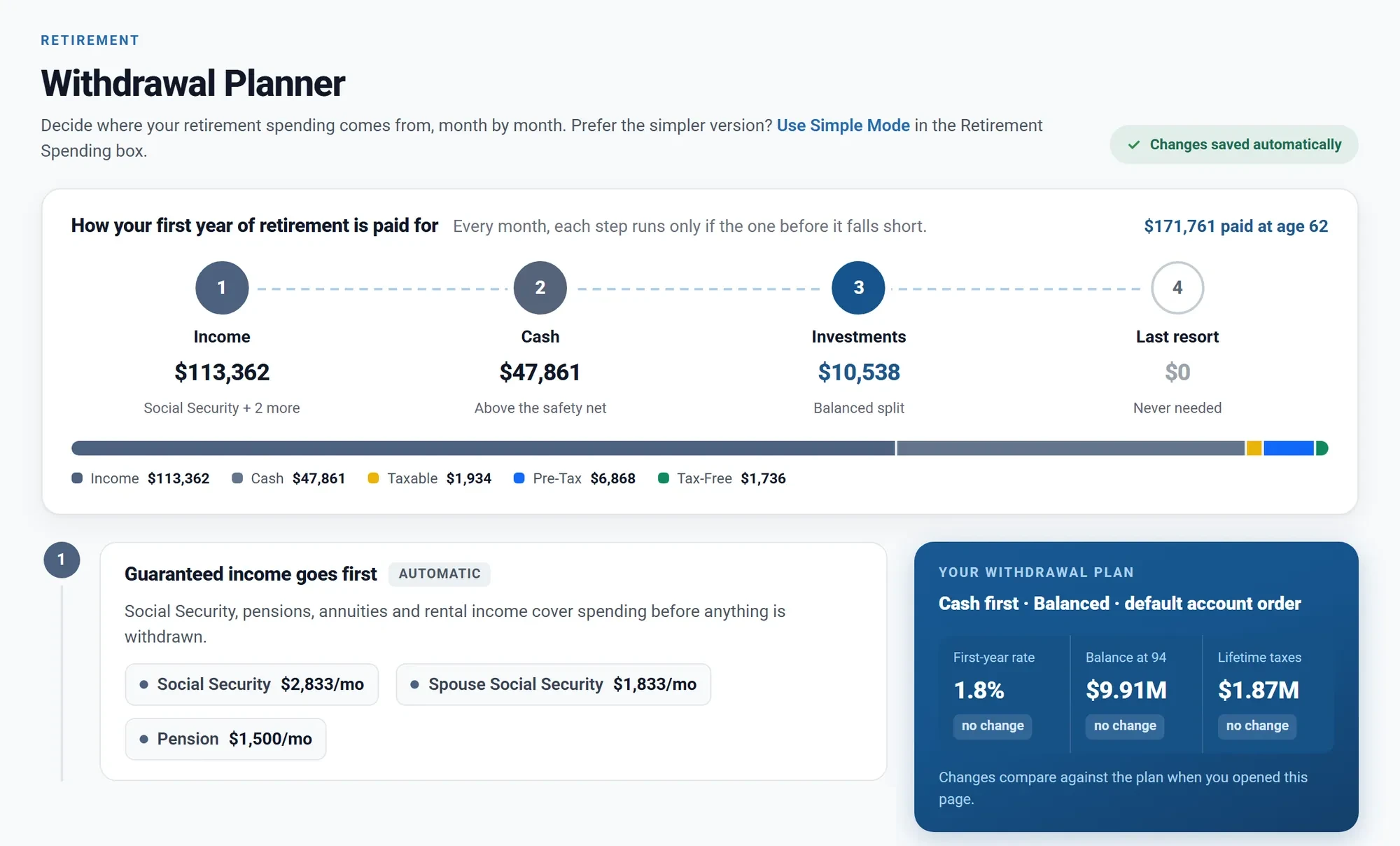
The Withdrawal Planner for Chris and Jamie, a made-up couple we use in our examples.
Every month of retirement, your spending is paid in four steps. Each one is used only if the one before falls short: your income, then your cash, then your investment accounts, and last of all the cash you asked the plan to keep.
It also answers the question we hear most: "why is my withdrawal strategy being ignored?" It never was. Cash was paying first. Now you can see that, and change it.
Keep it Simple, or switch to Advanced and choose:
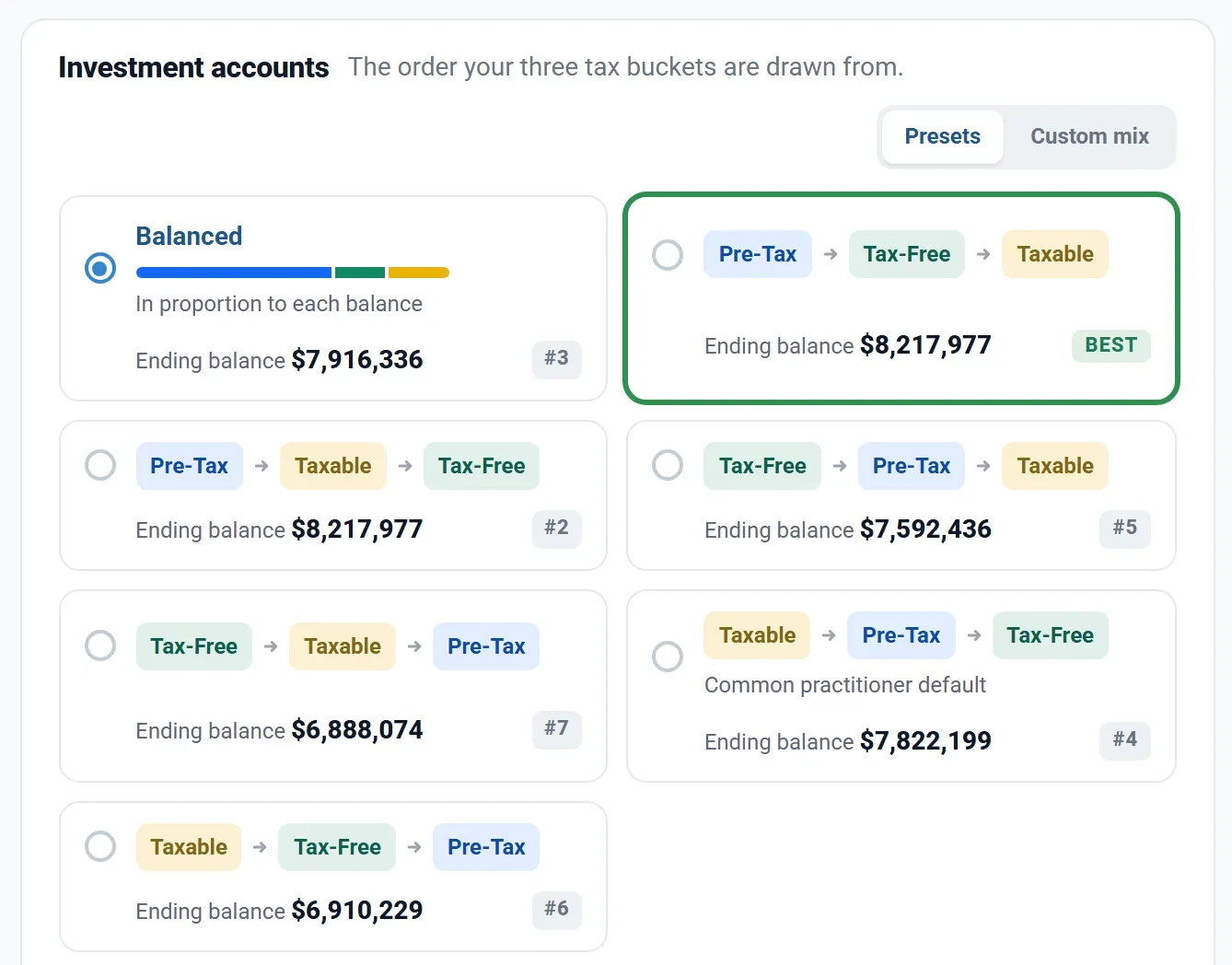
Find the best option ranks all seven orders on Chris and Jamie's plan.
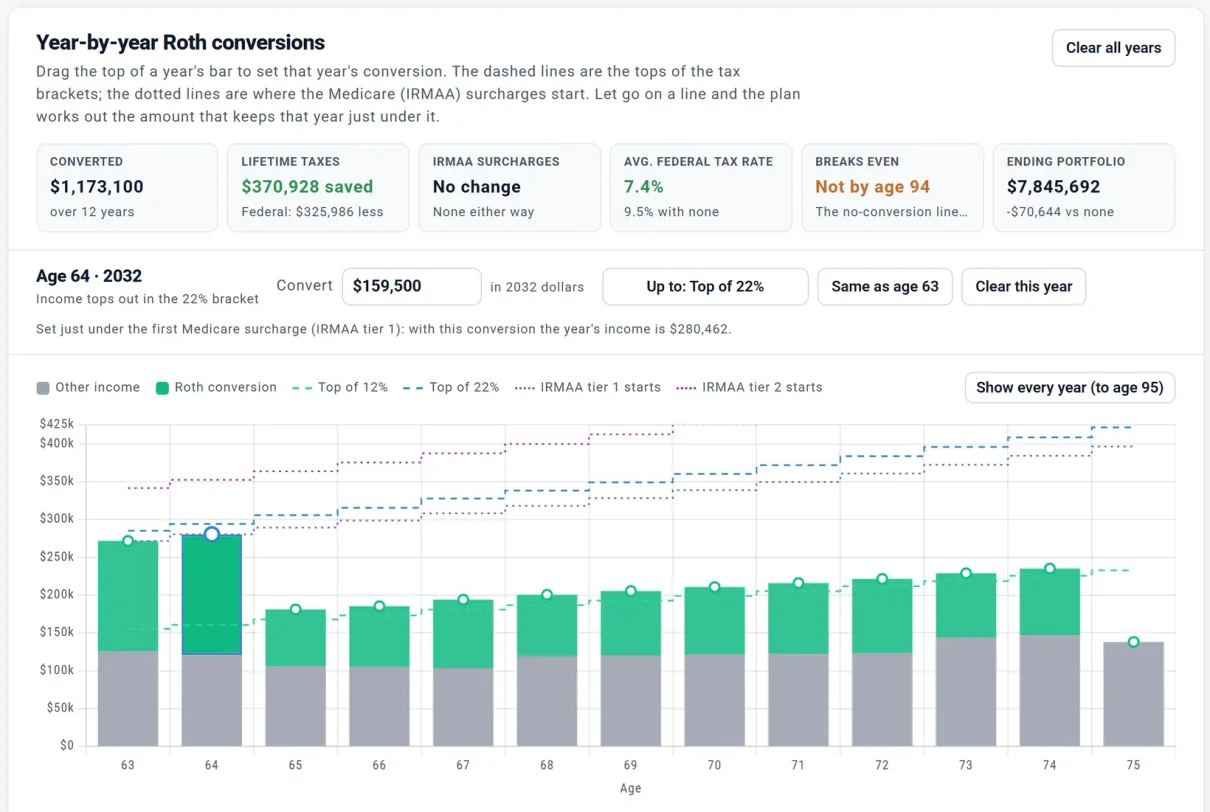
Year by year on Chris and Jamie's plan. Less tax over their lifetime, but a smaller ending balance: the page shows both.
A Roth conversion moves money from a pre-tax account to a Roth. You pay income tax on it now, and qualified withdrawals later are tax-free. That can mean smaller required withdrawals, lower tax when Social Security and other income stack up, and less tax for your heirs.
Set it up your way:
As you move a slider, you see the lifetime tax, Medicare surcharges, your average federal rate and the age a conversion breaks even, against converting nothing. It's a trade-off, not a sure saving, and the page is honest about that. Read the Roth conversions guide
Your plan works out its taxes month by month, then settles each year once on its actual income, like a tax return.
On a US plan, it counts:
The Your Taxes report adds it up over your lifetime, works out any one year line by line, and shows which income caused the tax.
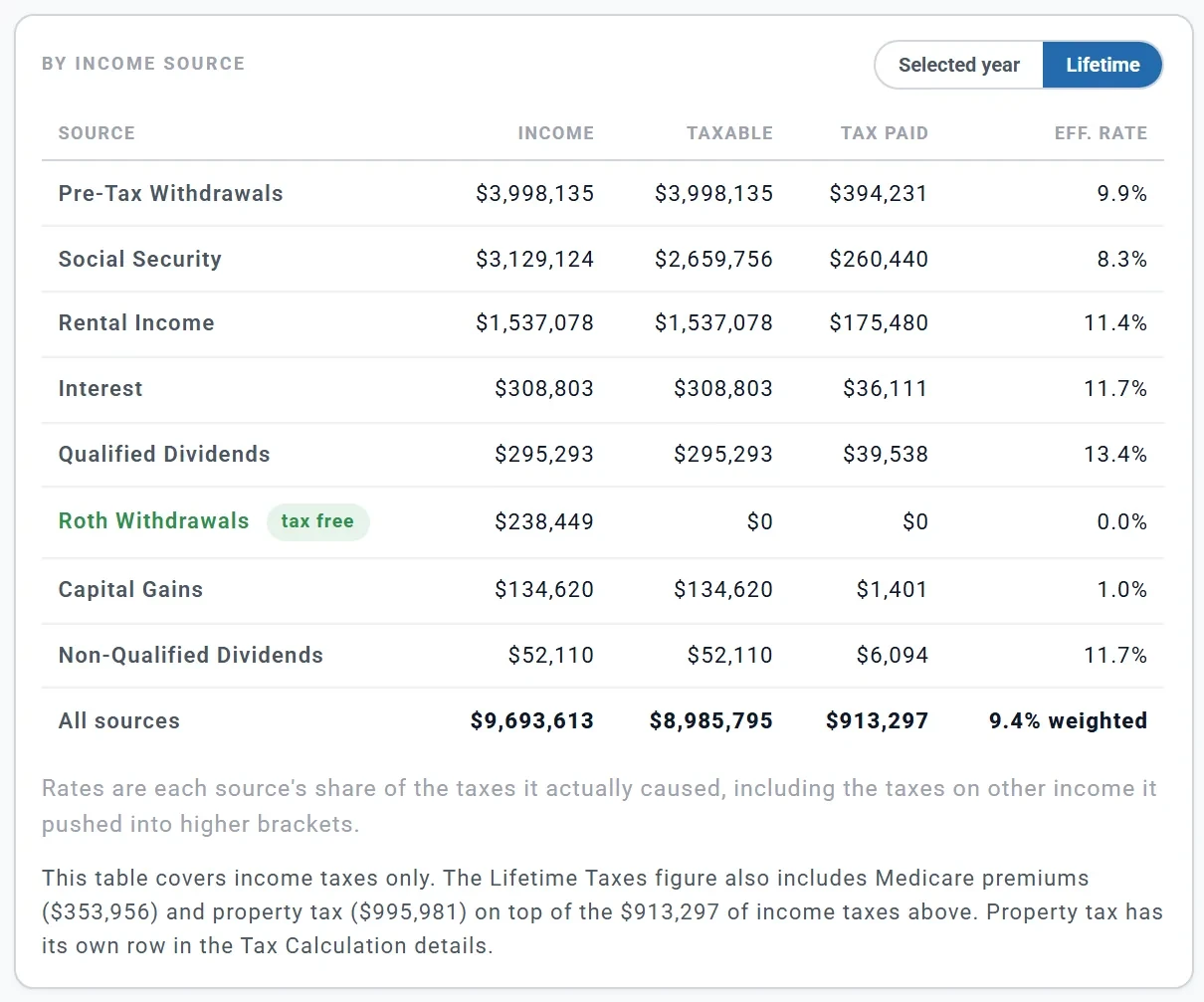
Which income caused Chris and Jamie's tax, over their lifetime.
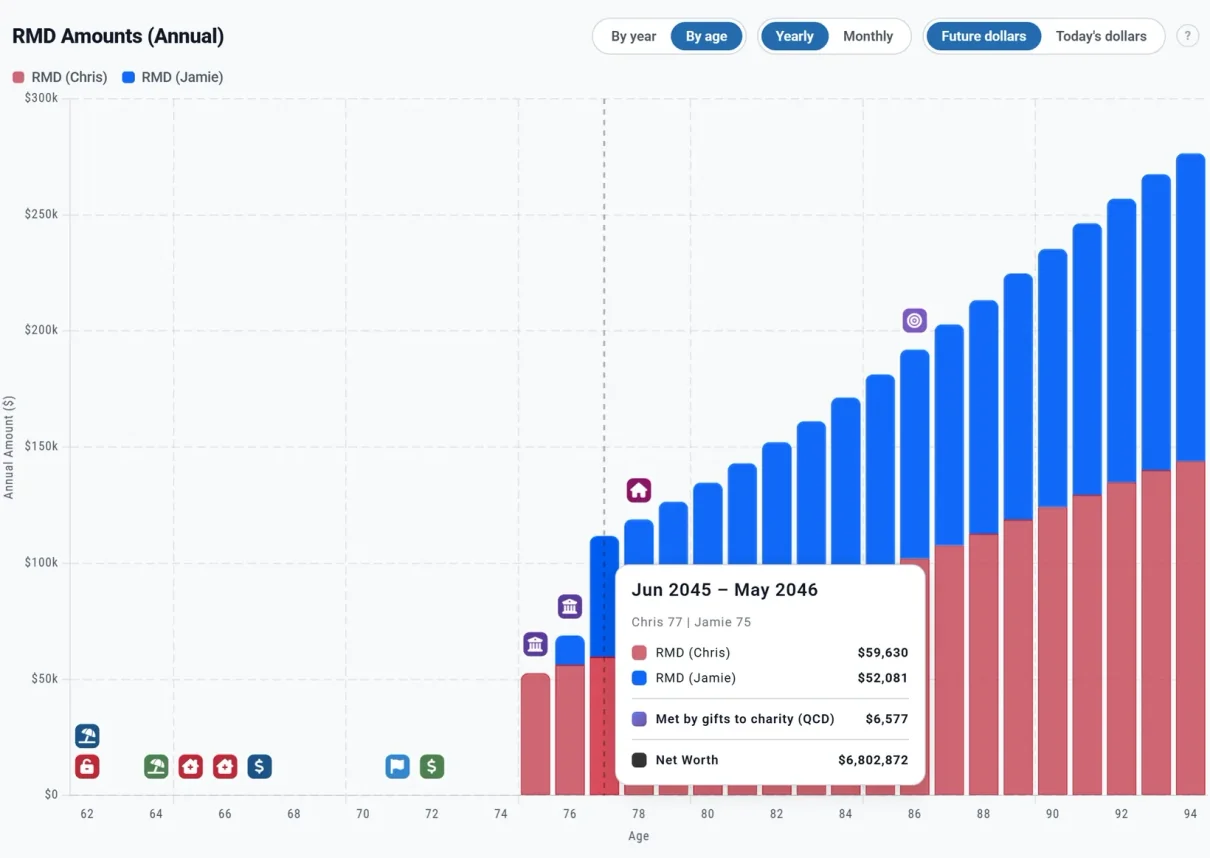
Chris and Jamie's required minimums, and the part their gifts to charity cover.
Required minimum distributions start at 73 if you were born from 1951 to 1959, and at 75 if you were born in 1960 or later. The plan takes each person's from their own pre-tax accounts.
When you claim changes your income for decades, and how much of it is taxed. Your plan works out how much of your benefit is taxable, up to 85%.
Compare every claiming age from 62 to 70, with spousal and survivor benefits, and see what each one does to the rest of your plan.
Within each step, your plan spends the money you can reach without a cost first: cash, taxable accounts, and the retirement accounts of whoever has retired.
Which order, which conversion, which bracket? The Optimizer runs hundreds of strategies against your own plan: every withdrawal order, Roth conversions of a set amount or up to a bracket or Medicare line, and extra withdrawals that fill a low bracket.
It ranks them, shows you the winner in plain English, and applies it in one click. Nothing changes until you say so.
Your first-year withdrawal rate sits right under your spending, with a plain-English read on it. The range it is judged against moves with the length of your retirement.
With Planner+, the Withdrawal Rate chart shows every year of retirement against the famous 4% and against the rate that would last the years you have left. Chris and Jamie's rate is highest in the years before Social Security starts.
There are no Roth conversions outside the US, but bracket filling works the same way: extra RRSP or RRIF withdrawals in Canada, or pension withdrawals in the UK, in your lower-income retirement years.
In Canada the OAS clawback caps the fill once your OAS starts. In the UK the fill stops at the £100,000 personal allowance taper.
Taxes can quietly erode even strong plans. Modeling them alongside your accounts, spending and income shows you where you have choices. Your plan's brackets grow with your inflation rate, not with future tax law, and real life will differ. Ready Aim Retire is an educational tool, not tax or investment advice.
Searches withdrawal orders and Roth conversions for a better strategy.
Compare claiming ages and see what each one does to your plan.
Your plan in plain English, and what is worth a look next.
Ask about your plan in plain English, and get answers from your own numbers.
Your plan replayed through real market history since 1871.
Every year of your plan, and the milestones that shape it.